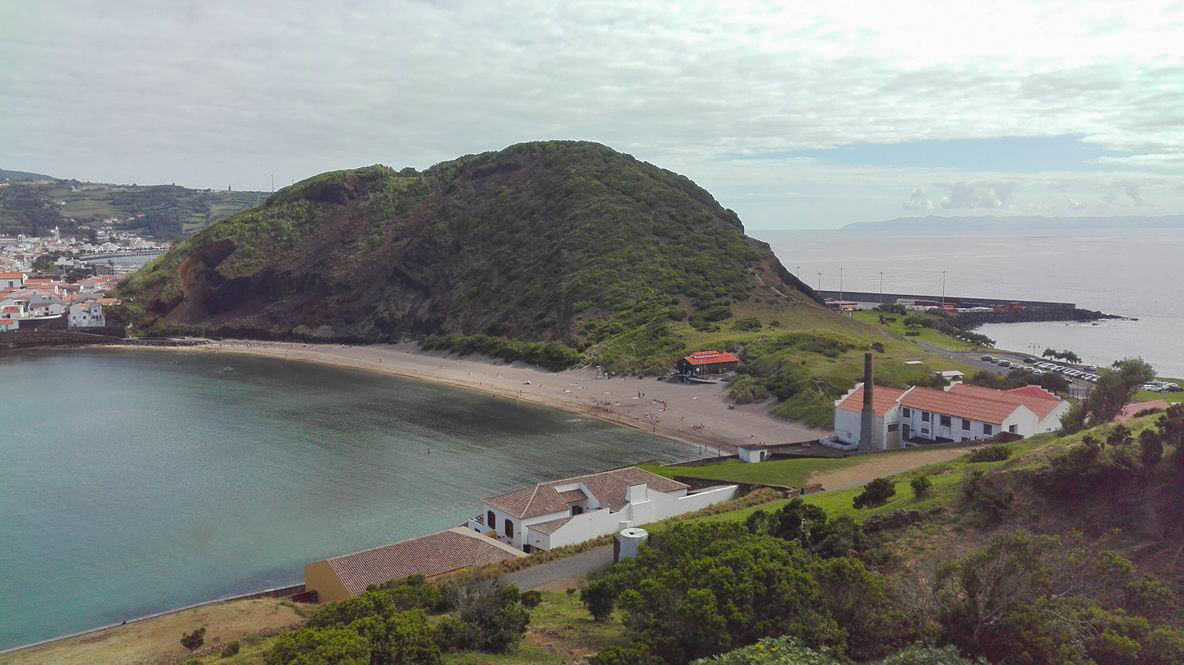



Go to the parking lot that serves Porto Pim beach, in the connection between Monte Queimado (scoria cone of sub-aerial origin) and Monte da Guia (surtseyan tuft cone of submarine origin). You will find two information panels, one of them with the general information about this footpath, as usual in the footpaths belonging to region’s official footpath network, and another referring to trail running, considering that this was the first permanent trail run circuit of the Azores, with its specific signalling. So, this footpath complements the usual contemplative and leisure part with a sportive and competitive side, seeing that it allows athletes to have a permanent track to train before competitive events. It is worth mentioning that Faial was the great promoter of Trail Run races in the Azores, with an event called “Azores Trail Run”, that had its first edition in 2014 and, since then, has been happening every year, usually in the end of May.
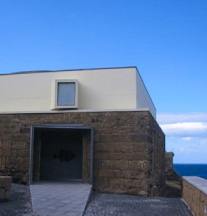
With Pico island to your left, follow the road for a couple of metres, until you reach the building where once worked the Porto Pim Whale Factory. Today, besides the exhibit that allows the visitor to know the artefacts of the old factory, it houses OMA - Observatório do Mar dos Açores (Azores Sea Observatory), a Science Centre dedicated to promoting activities to publicize Marine Sciences, namely those related to the azorean sea. It is worth saying that OMA organizes guided tours of the Whale factory.
Just after visiting the old factory, you have the Dabney’s house, one of the several examples of the architectural heritage that belonged to the Dabney family, that settled in Horta in 1806, making a mark in the island’s history with their presence, that lasted three generations in the 19th century. This summer house was part of an estate that included a home with a cistern, a jetty and shelter for two row-boats, a viewpoint and a small vineyard that spread through the slope towards Porto Pim bay. In the wine-cellar there is now an exhibit that shows the life story of the American family that came from Boston. It is worth mentioning that the Dabney family extended their influence in various areas, as: diplomacy – Unites States General Consul in the Azores and local conflicts mediation; businesses: increase of Horta’s harbour shipping movement by importing and exporting wine, aqua-vitae, oranges, whale oil, supplies for whaling ships, supply of coal and ship repair.
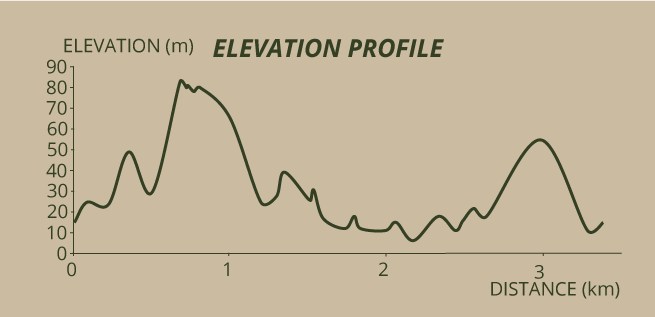
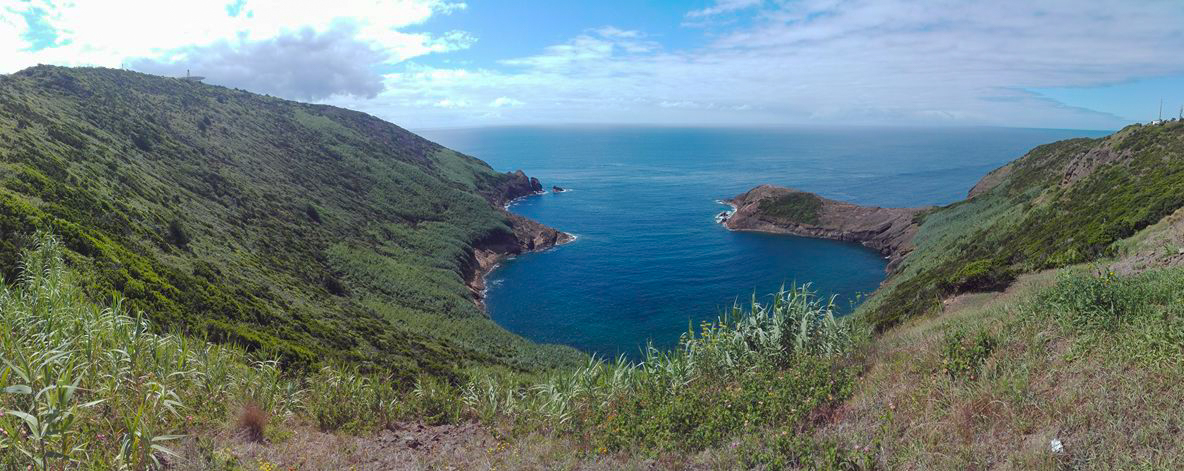
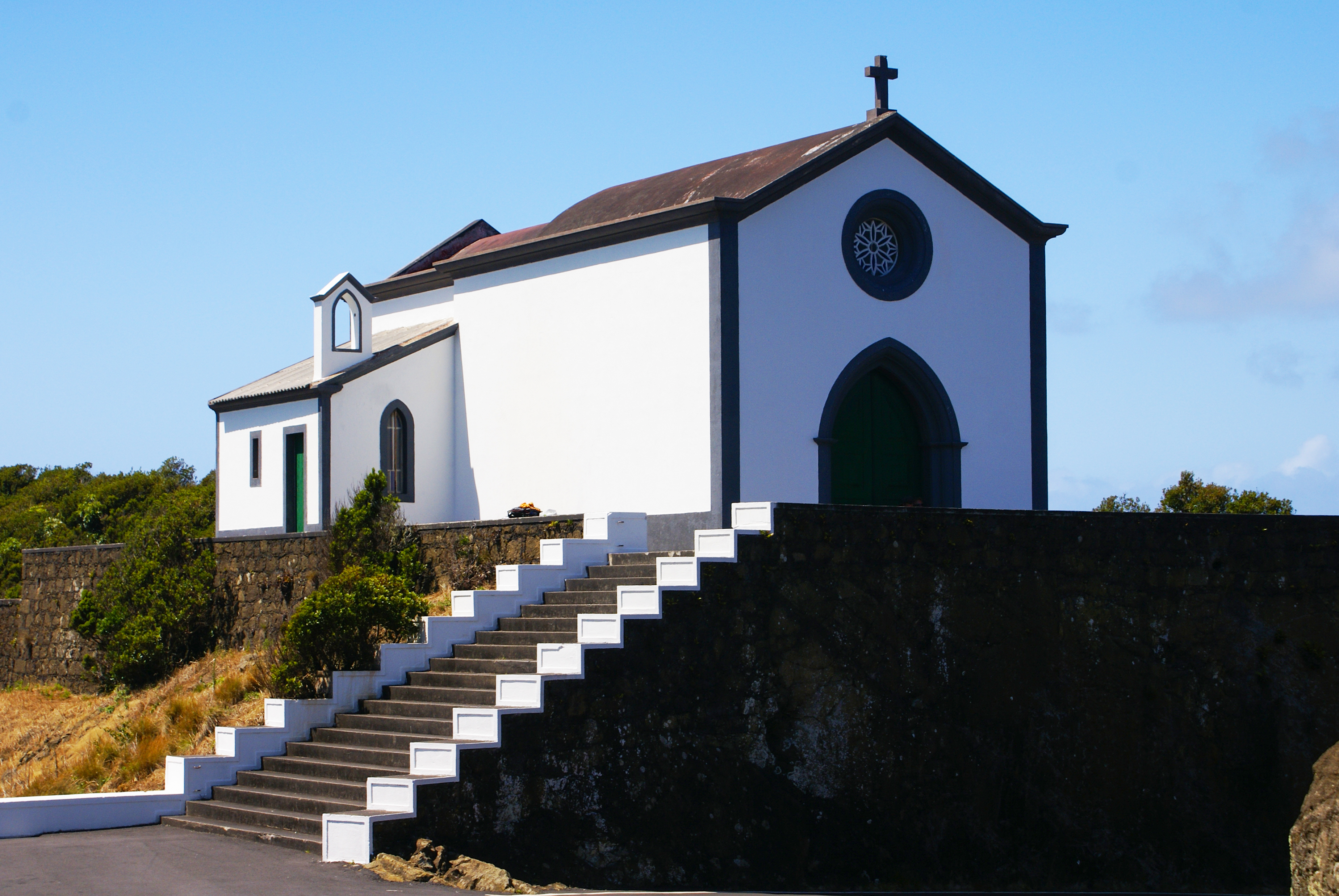
After the Dabney’s house, climb to the left up until the Lira Viewpoint, where you will have a first view over the bay, with Fort of São Sebastião on the opposite bank. The existence in this area of some maritime protection fortifications (16th and 17th centuries) caused this place to be called Porto Pim, a Flemish name that means “Safe Harbour”. Continue for 100 metres and turn left among the Erica azorica, Morella faya and Pittosporum undulatum until you reach the road. Turn right and climb the stairway of the Chapel of Nossa Senhora da Guia, where you will reach the highest point of the trail, and probably you will be able to observe a great part of the island, as well as Porto Pim bay and Horta city. It is worth mentioning that Horta played a fundamental role in the history of communications between the European and American continents, seeing that it was an important mooring point of the old submarine telegraph cables. Moving along, proceed to the left of the Chapel, towards the south-west tip of Monte da Guia. On the side opposite to the city, you can observe two volcanic craters called Caldeirinhas, with Pico appearing in the background. After you reach the south-west tip, follow the sign that tells you to go down through the right, continuing on the coastal path for 500 m, until you reach the Porto Pim Aquarium, where you will find some of the most common coastal species of the Azores sea. On the next crossing take to the left, passing again by the Dabney’s House and, when you reach Porto Pim beach, go to the left across the entire sand strip. At the end of the beach, turn right and go through the Rua da Rosa. 150 metres up ahead you will find the sign that tells you to turn right to Monte Queimado. When you reach the top of the hill, enjoy the scenery, specially Horta city and its marina, as well as Porto Pim bay and Monte da Guia. Go down the south slope of Monte Queimado through an improvised stairway of wooden logs, among specimens of the endemic Erica azorica and Morella faya until you reach the parking lot again.